Rising damp guide
Damp Below Suspended Timber Floors
Older houses with suspended timber floors need airflow beneath the boards. When the void stays wet, the resulting symptoms can be mistaken for rising damp.
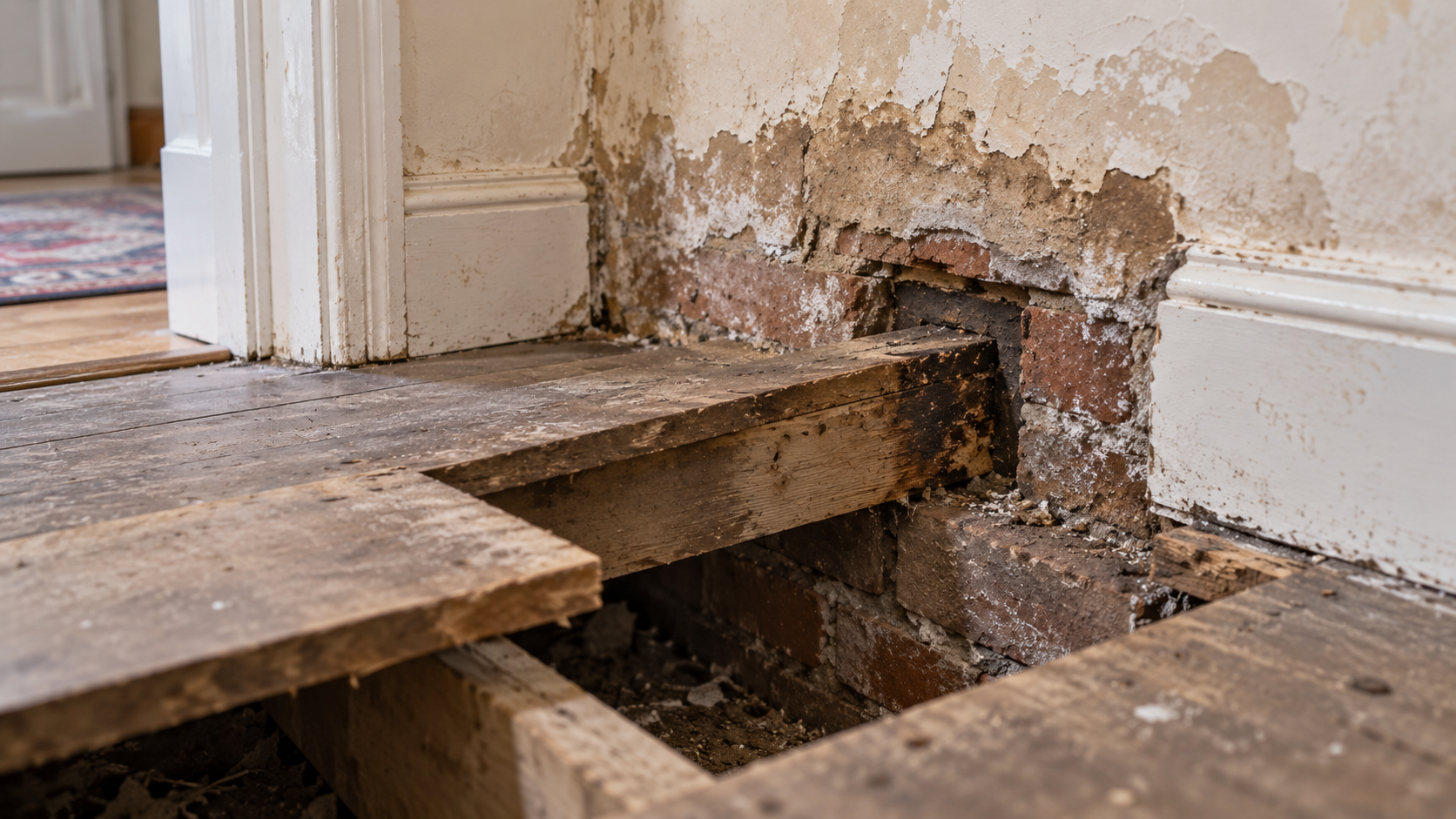
Air bricks need a route through
One visible vent does little if internal sleeper walls block cross-flow or if vents on the opposite side have been covered by paving.
High ground can create two problems
Raised external levels may both bridge the DPC and obstruct air bricks. That combination can leave the wall and timber floor damp together.
Check for leaks in the void
Old heating pipes, water services and waste fittings can leak unnoticed beneath boards. The source should be ruled out before blaming ground moisture.
Timber condition matters
If joist ends have remained wet, inspect them where they enter masonry. Soft flooring near the wall is a reason to look rather than simply treating the plaster.
Want somebody local to look at it?
If you would rather have the damp investigated in person, you can use our help page to describe the problem and decide what sort of specialist you need.