Rising damp guide
What Is Rising Damp?
Rising damp is moisture moving upwards through porous masonry from the ground. It is a real building defect, but damp near floor level can have several other causes, so the position of a stain is not enough to diagnose it.
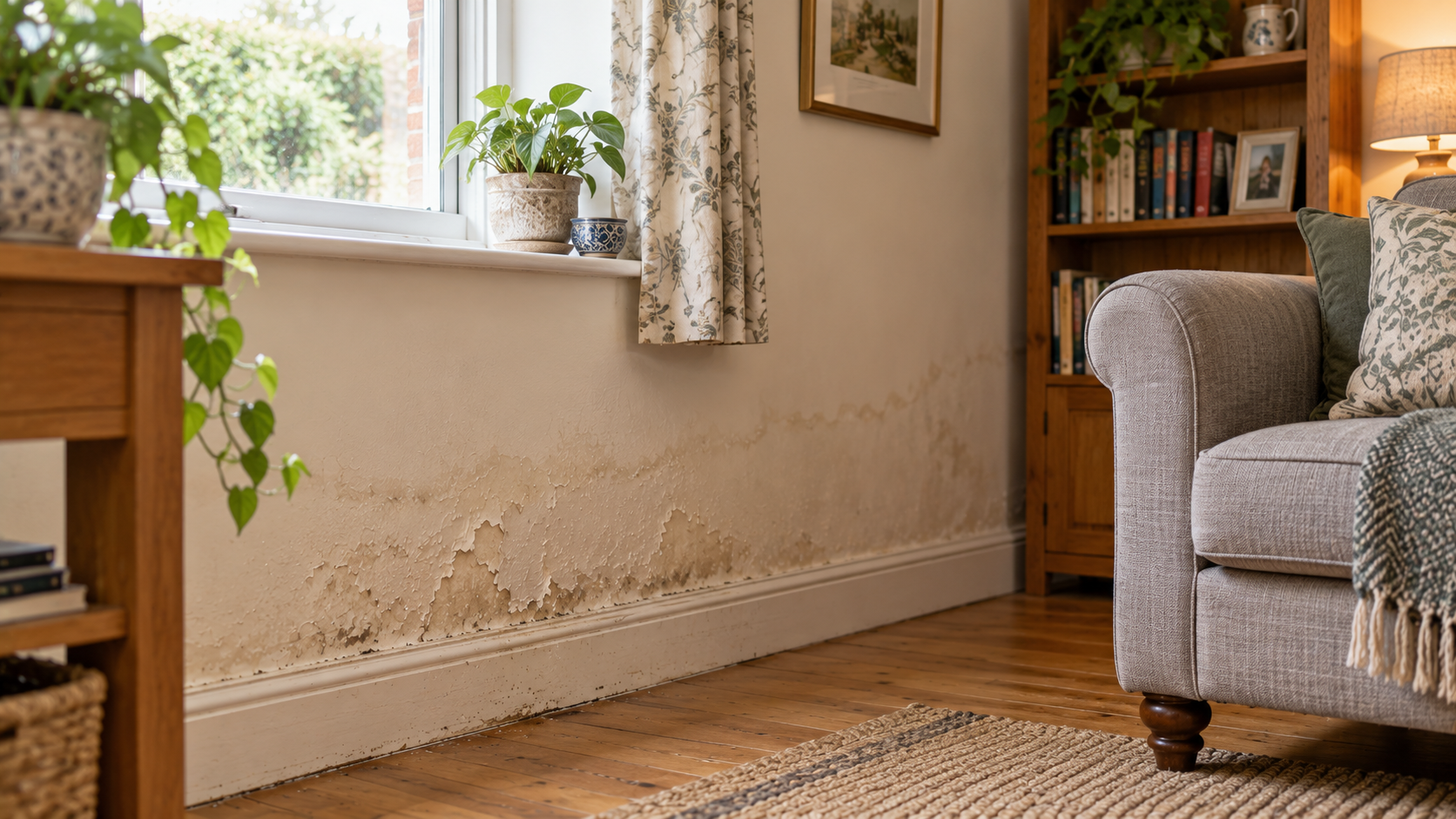
What actually happens in a wall
Brick, stone and mortar contain tiny pores. Where masonry is in contact with damp ground and there is no effective barrier, water can move upwards through those pores by capillary action. The height reached is influenced by the material, evaporation and the amount of water available.
In many houses a physical or chemical damp-proof course interrupts that path. Problems arise where the DPC is missing, ineffective or bypassed.
Why low-level damp is not proof
A leaking pipe below the floor, a bridged cavity, high paving outside, salt-contaminated plaster and condensation can all leave damp near the bottom of a wall. Some of those faults need completely different repairs.
What genuine cases can look like
Possible signs include damaged decoration, crumbling plaster, salts and deterioration of skirting close to floor level. The pattern may extend along a length of wall rather than appearing as one isolated spot. None of these signs is conclusive on its own.
What to do next
Look at both sides of the affected wall if possible. Check whether outside paving, soil or render is close to the DPC. Note whether the problem changes after rain and whether plumbing or drains run nearby. Those observations are far more useful than simply reporting that the wall feels damp.
Want somebody local to look at it?
If you would rather have the damp investigated in person, you can use our help page to describe the problem and decide what sort of specialist you need.