Rising damp guide
How Rising Damp Is Diagnosed
Good diagnosis is a process of eliminating other realistic water sources and checking whether the wall construction supports the explanation being offered.
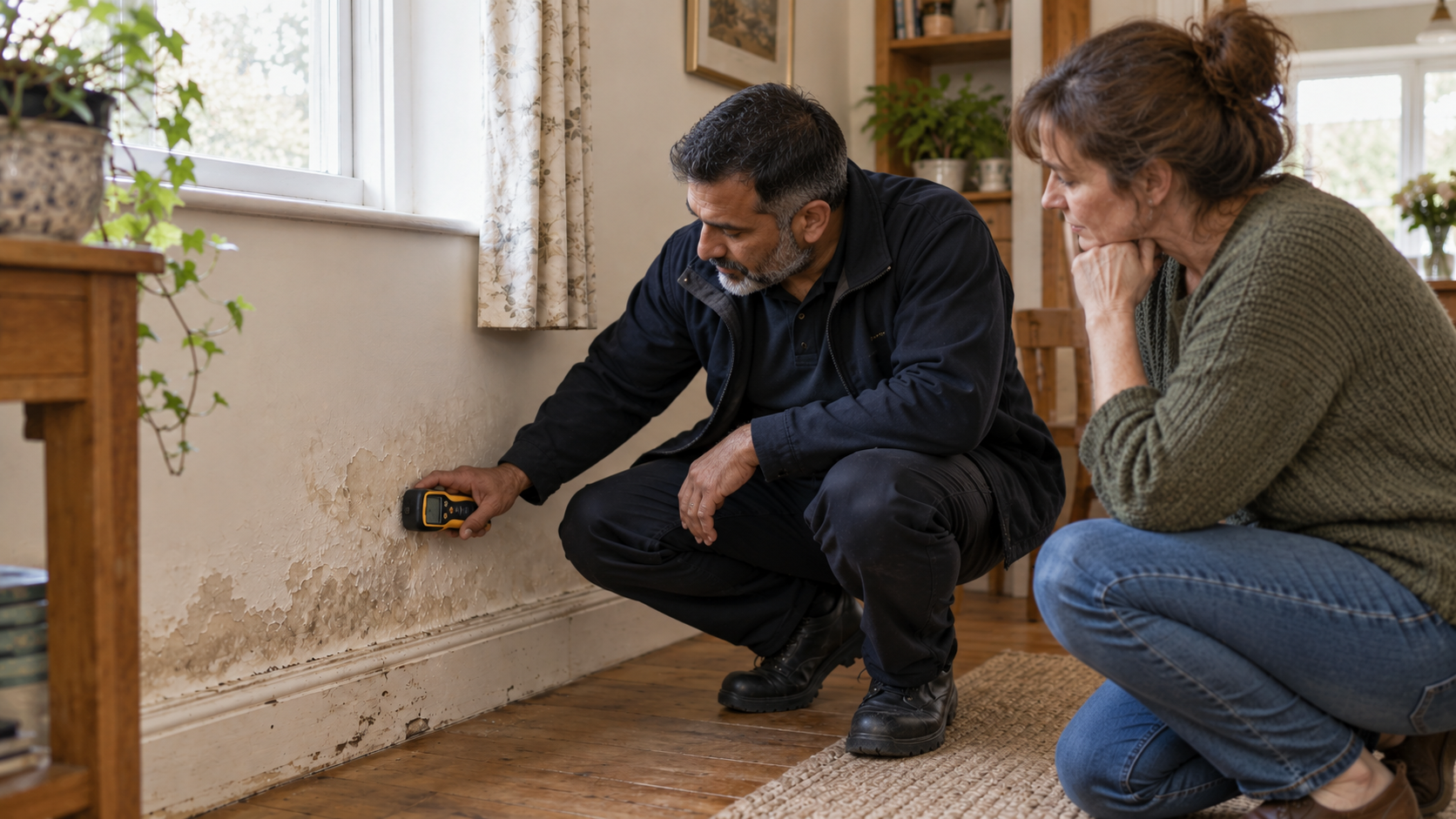
Start with the pattern and history
When did the damp appear? Is it on one wall or several? Does it worsen after rain? Was the floor, path or driveway altered beforehand? These details can quickly change the direction of an inspection.
Inspect outside as well as inside
Ground levels, render, gullies, downpipes, pointing, vents and visible DPCs matter. An internal reading without an external inspection leaves obvious possibilities unchecked.
Understand the construction
Solid and cavity walls behave differently. Suspended timber floors introduce different risks from solid concrete floors. Previous alterations can change moisture paths considerably.
Use instruments as evidence, not a verdict
Moisture meters can support an investigation, particularly when used to map a pattern, but readings need interpretation alongside salts, plaster, building details and possible leaks.
Want somebody local to look at it?
If you would rather have the damp investigated in person, you can use our help page to describe the problem and decide what sort of specialist you need.