Rising damp guide
Rising Damp or Penetrating Damp?
Rainwater entering through the side of a building can create low-level damp that looks surprisingly similar to rising damp from inside.
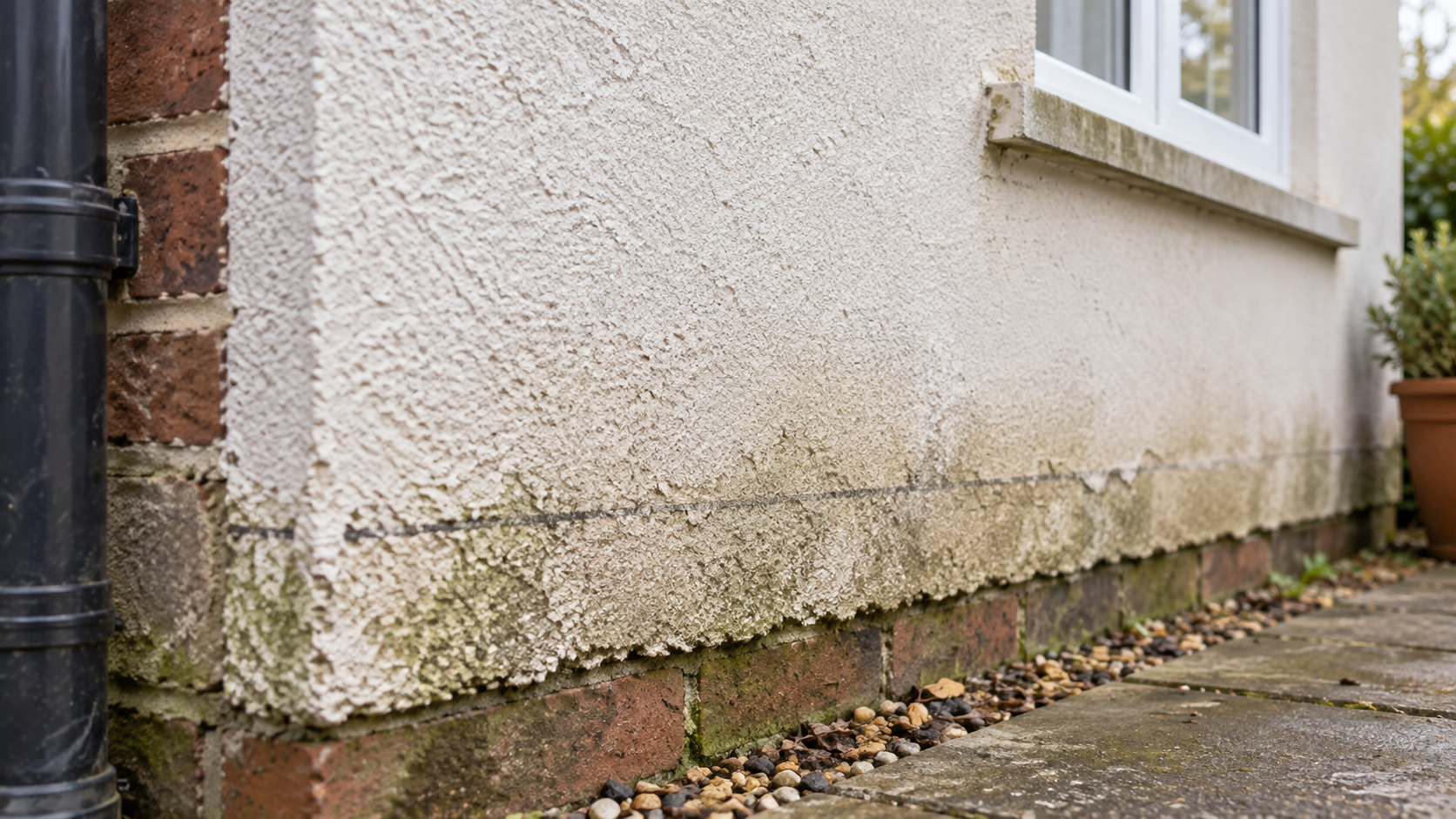
What changes after rain
If staining becomes noticeably darker after heavy or wind-driven rain, investigate the outside face carefully. Cracked render, failed pointing, overflowing rainwater goods and water splashing against the wall can all matter.
Why height alone can mislead
Penetrating damp does not always appear high on a wall. Water can enter just above a path or accumulate where external ground is raised. The resulting internal patch may sit exactly where people expect rising damp to be.
Look for a local source
One wet area beside a downpipe, gully or external tap deserves a different investigation from a broad band of moisture running along several metres of wall.
Repair the route water is using
If rainwater is entering laterally, a new injected DPC will not repair cracked render or a leaking pipe. That is why external inspection is part of a sensible damp investigation.
Want somebody local to look at it?
If you would rather have the damp investigated in person, you can use our help page to describe the problem and decide what sort of specialist you need.