Rising damp guide
Rising Damp in Older Houses
Older houses are often more complicated than a simple “failed DPC” label suggests. Construction details and later changes can alter how moisture behaves.
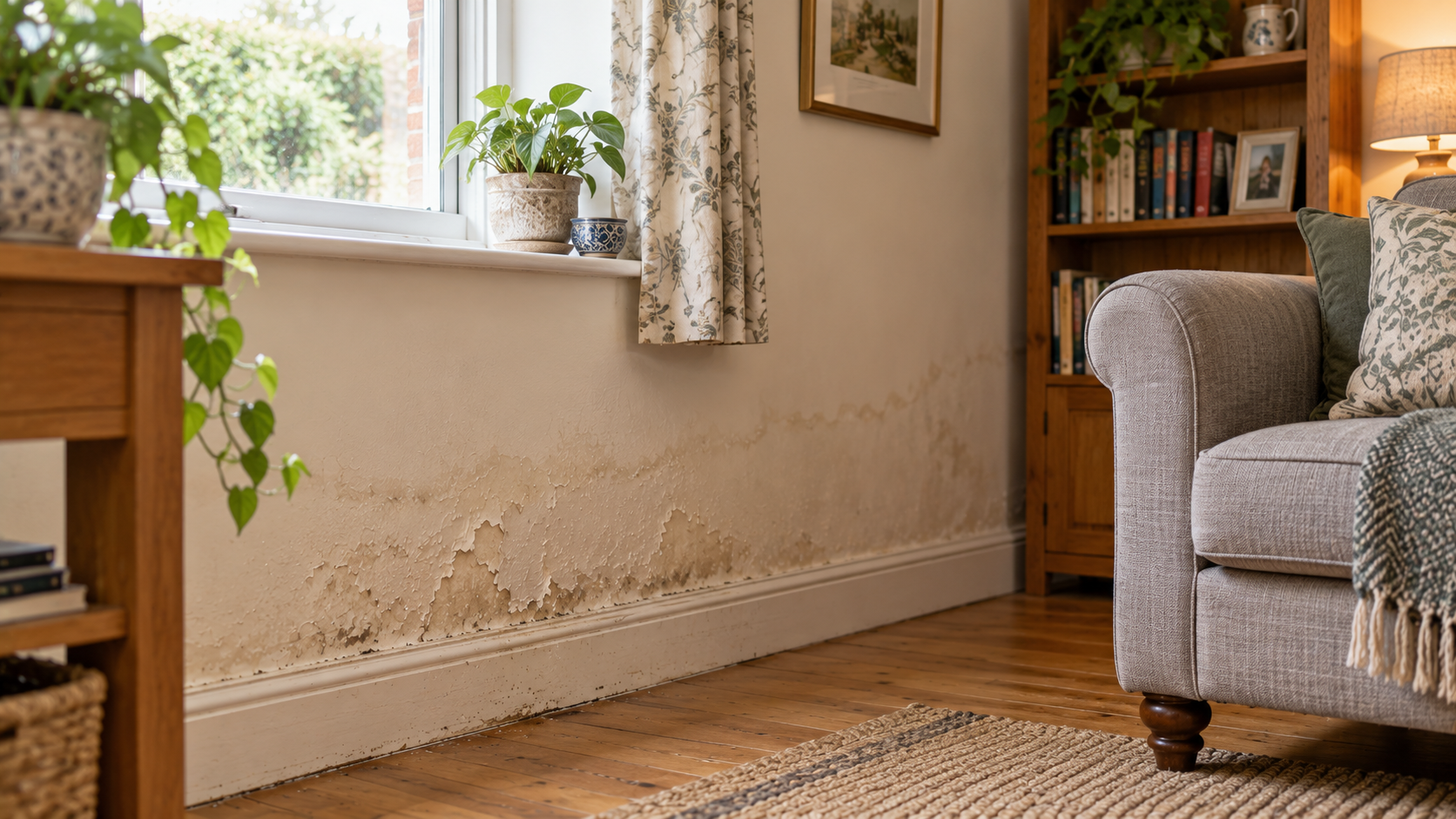
Do not assume there was never a DPC
Some older buildings used slate, dense brick or bituminous materials as damp barriers. Their presence can be difficult to see once walls are rendered or repointed.
Later alterations can create bridges
Raised paths, concrete floors, cement render and blocked sub-floor vents may all change the moisture balance long after the house was built.
Breathable materials can matter
Traditional lime-based construction handles moisture differently from dense modern cement and impermeable coatings. The repair should suit the wall rather than follow one standard recipe.
Investigate before stripping everything
Old plaster and joinery are part of the building. Remove material where the diagnosis and condition justify it, not merely because the house is old.
Want somebody local to look at it?
If you would rather have the damp investigated in person, you can use our help page to describe the problem and decide what sort of specialist you need.