Rising damp guide
Can a Newer House Have Rising Damp?
Modern houses normally include damp-proof courses and floor membranes, so low-level damp deserves a close look at detailing and other water sources.
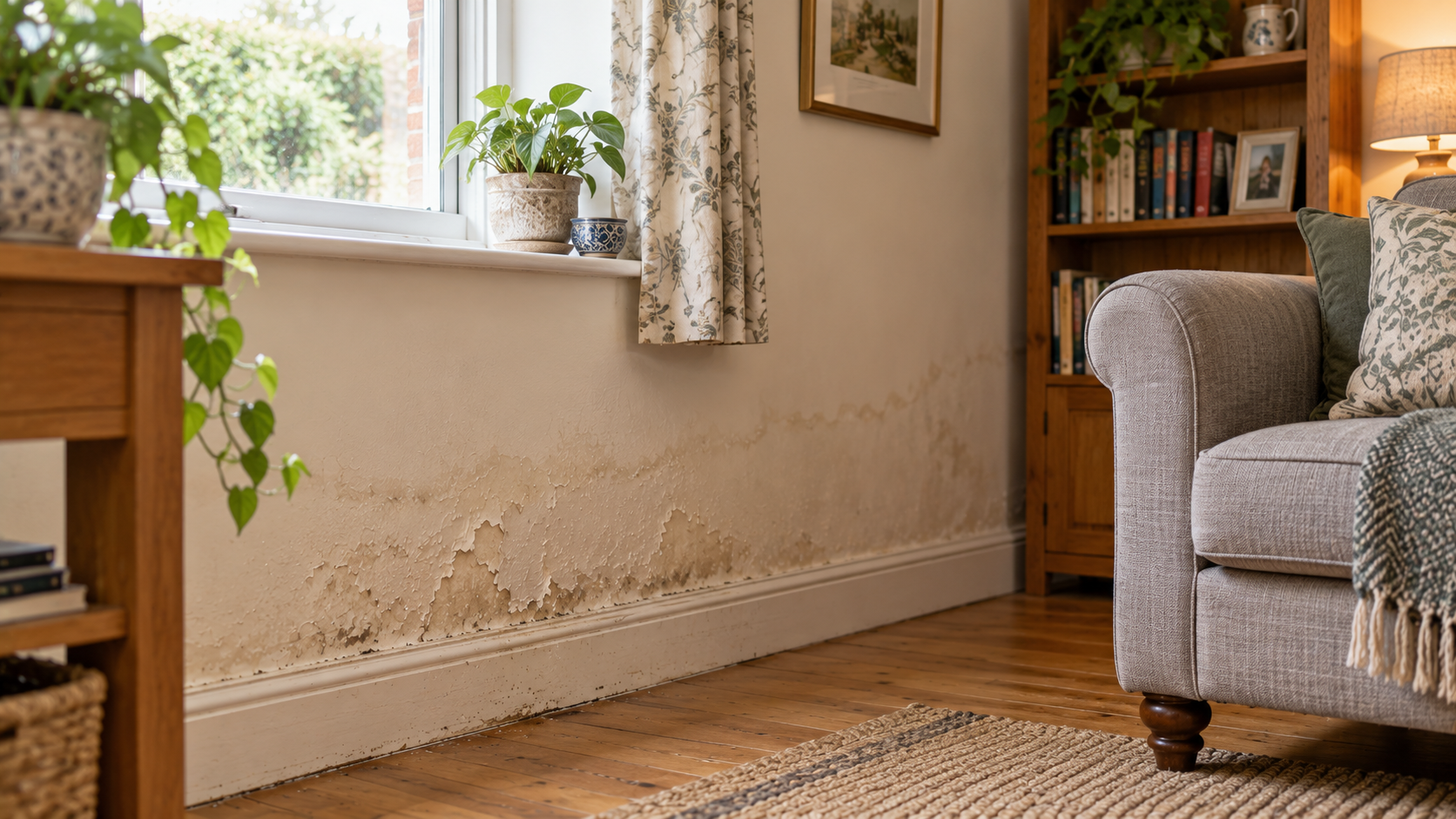
Bridging can still occur
Raised paving, render, cavity debris and poor floor-edge details can all bypass modern damp protection.
Construction defects are possible
A membrane or DPC may be damaged, badly joined or incorrectly positioned. That needs evidence rather than assumption.
Leaks are often more plausible
Modern properties contain extensive plumbing in floors and walls. A local wet patch may have a service-related cause.
Condensation remains common
Highly insulated, relatively airtight homes can suffer condensation where ventilation is inadequate or thermal bridges leave cold surfaces.
Want somebody local to look at it?
If you would rather have the damp investigated in person, you can use our help page to describe the problem and decide what sort of specialist you need.