Rising damp guide
Leaking Drain or Rising Damp?
Drainage faults are easy to miss because the leak may be underground. Persistent low-level damp close to a gully, soil pipe or drain run deserves attention.
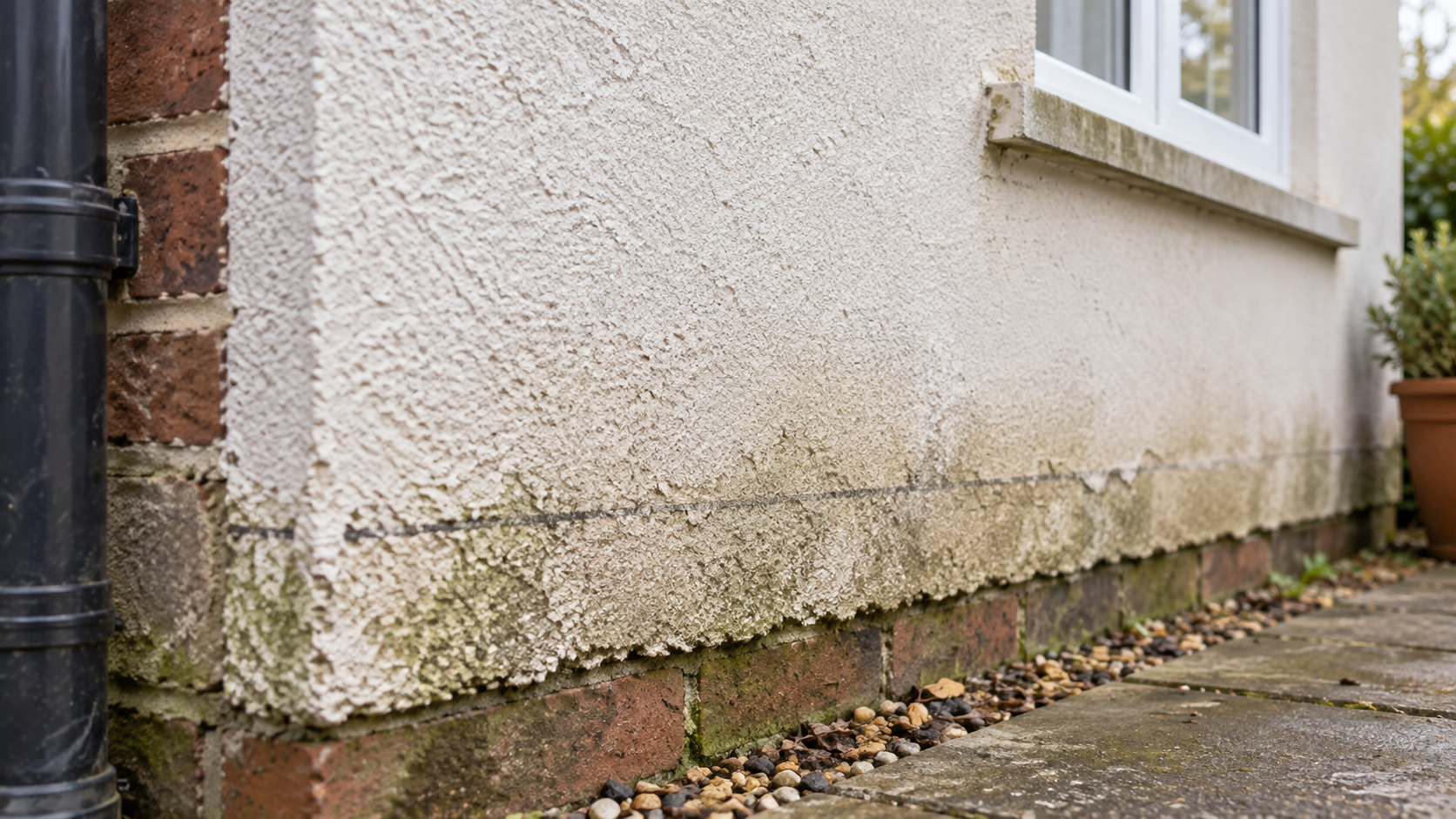
What escaping water does
A cracked drain or defective joint can keep surrounding ground unusually wet. That moisture can then affect nearby masonry or enter below-floor areas.
Look for supporting signs
Slow drainage, recurring blockages, smells, settlement around a gully or damp concentrated near a drain route can make drainage investigation more worthwhile.
Rain can reveal the problem
Some defective systems only surcharge or leak badly during heavy rainfall. A damp patch that reacts to storms may therefore have a drainage connection.
Camera inspection can be useful
Where a buried drain is suspected, a CCTV survey can identify cracks, displaced joints or root entry without excavating the whole run.
Want somebody local to look at it?
If you would rather have the damp investigated in person, you can use our help page to describe the problem and decide what sort of specialist you need.