Rising damp guide
Hygroscopic Salts in Damp Walls
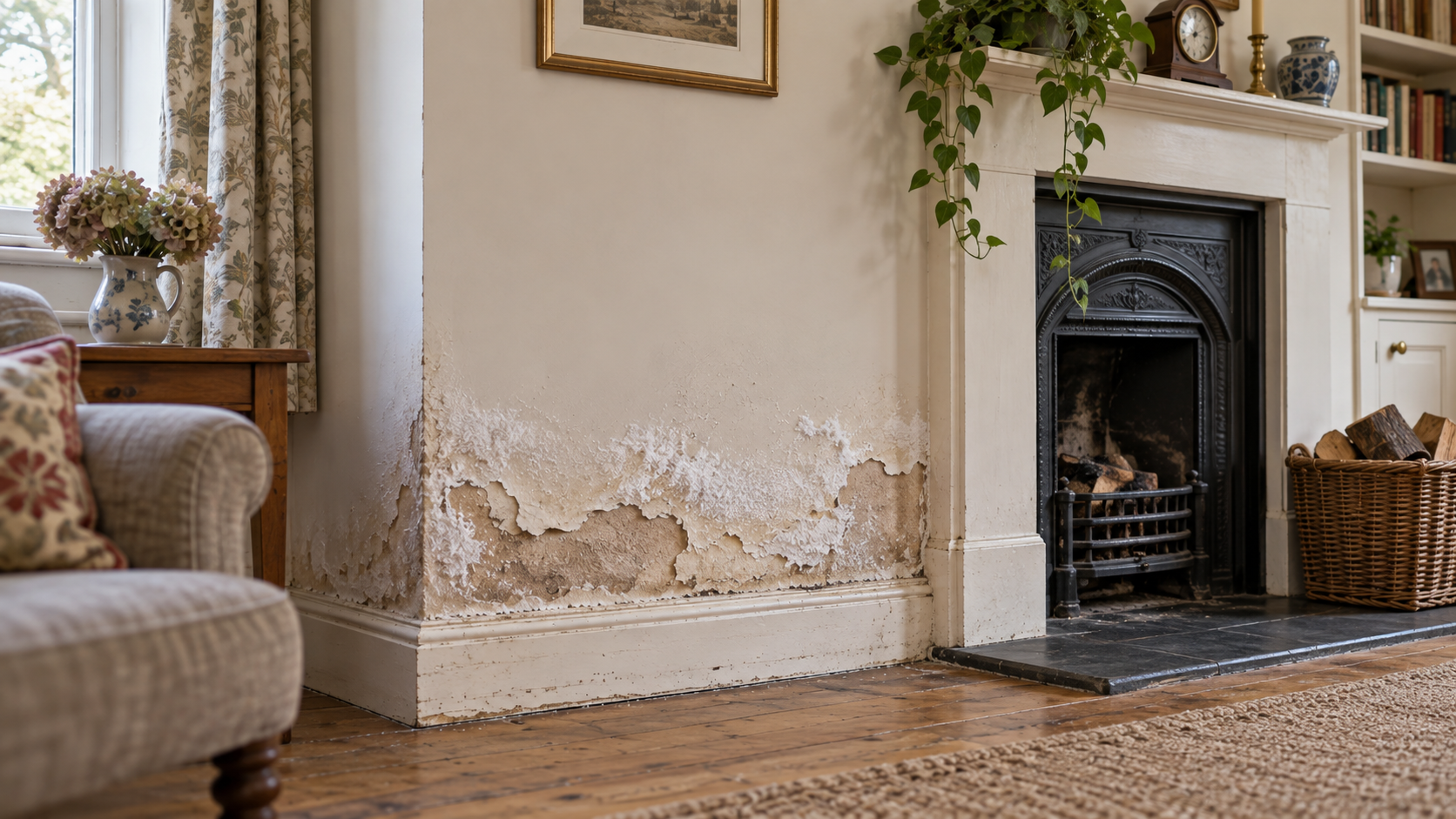
Some old damp walls continue to attract moisture after the original leak or rising damp has been dealt with. Salts in the plaster are one possible reason.
What hygroscopic means
Hygroscopic salts absorb water from humid air. They can therefore make a surface damp without a continuing flow of liquid water through the wall.
Where salts come from
Ground moisture can carry salts into masonry. Old chimney breasts can also contain heavy contamination from combustion products and historic damp.
Why meters can confuse matters
Salts can increase electrical conductivity and produce high readings on some handheld meters. That is one reason a meter reading alone is not a reliable diagnosis of active rising damp.
Treatment is about the contaminated material
If salts are causing persistent trouble, the relevant question may be whether affected plaster needs replacing or isolating, not whether the wall requires another DPC.
Want somebody local to look at it?
If you would rather have the damp investigated in person, you can use our help page to describe the problem and decide what sort of specialist you need.