Rising damp guide
Damp Plaster After Rising Damp
The wall can be improved while the plaster still looks poor. Old plaster has its own history and may contain salts carried through the masonry over many years.
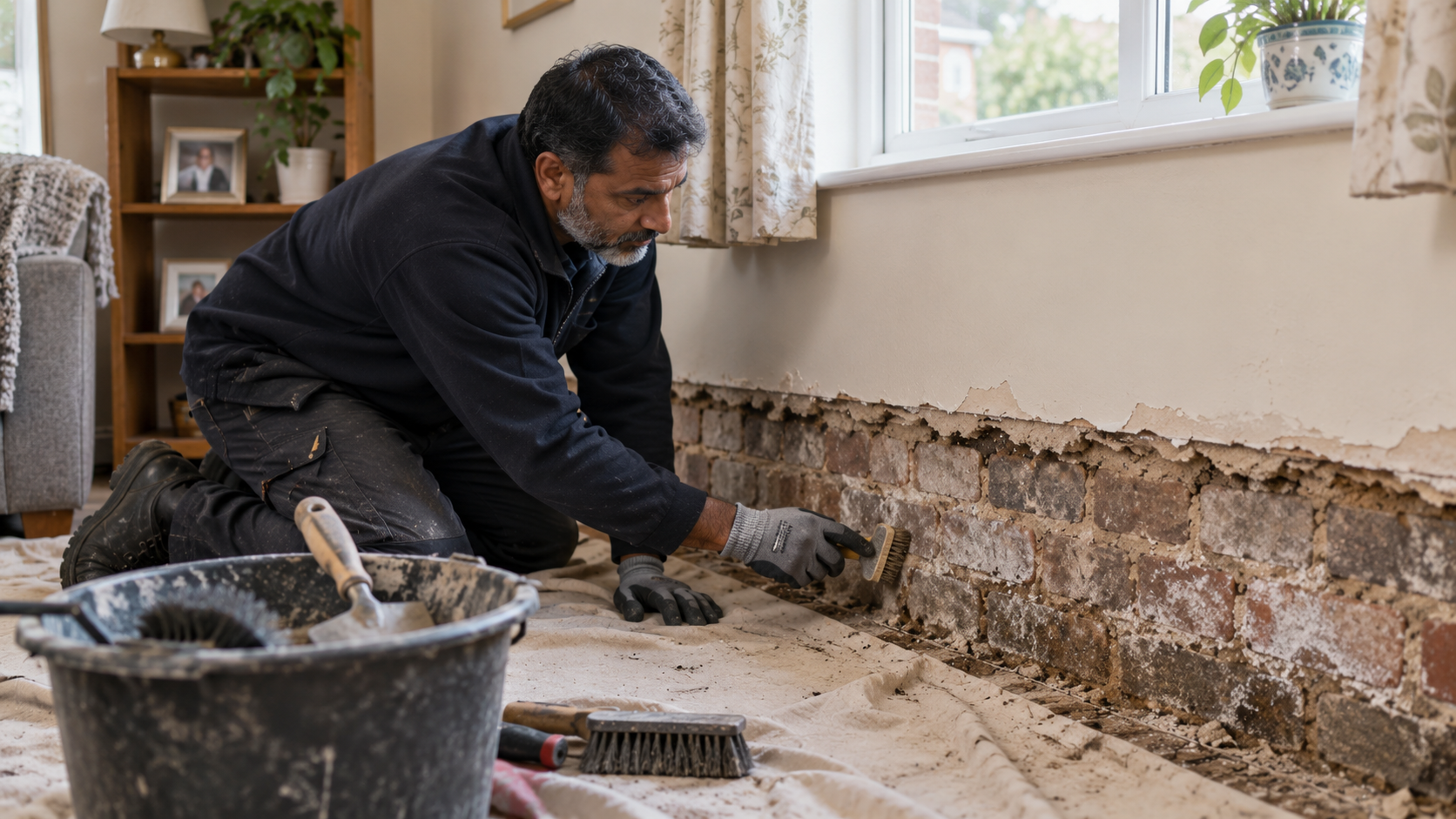
What moisture leaves behind
As water travels through masonry it can dissolve salts. When the water evaporates at the plaster surface, those salts remain behind. Repeated cycles can leave a considerable concentration.
Why the wall can still look damp
Some salts attract moisture from humid air. This can make the plaster feel or look damp even after the original rising moisture has been reduced.
Does every wall need replastering?
No. The extent depends on the plaster condition, salt contamination and treatment design. Sound, uncontaminated areas should not be removed merely because they are on the same wall.
Redecoration needs patience
Heavy vinyl finishes and premature decoration can slow drying or show staining. Follow the repair specification rather than assuming a freshly treated wall is ready for its final finish immediately.
Want somebody local to look at it?
If you would rather have the damp investigated in person, you can use our help page to describe the problem and decide what sort of specialist you need.