Rising damp guide
Damp on a Chimney Breast
Old chimneys are awkward damp cases because they can combine rain penetration, condensation, salts and ground moisture in the same stretch of masonry.
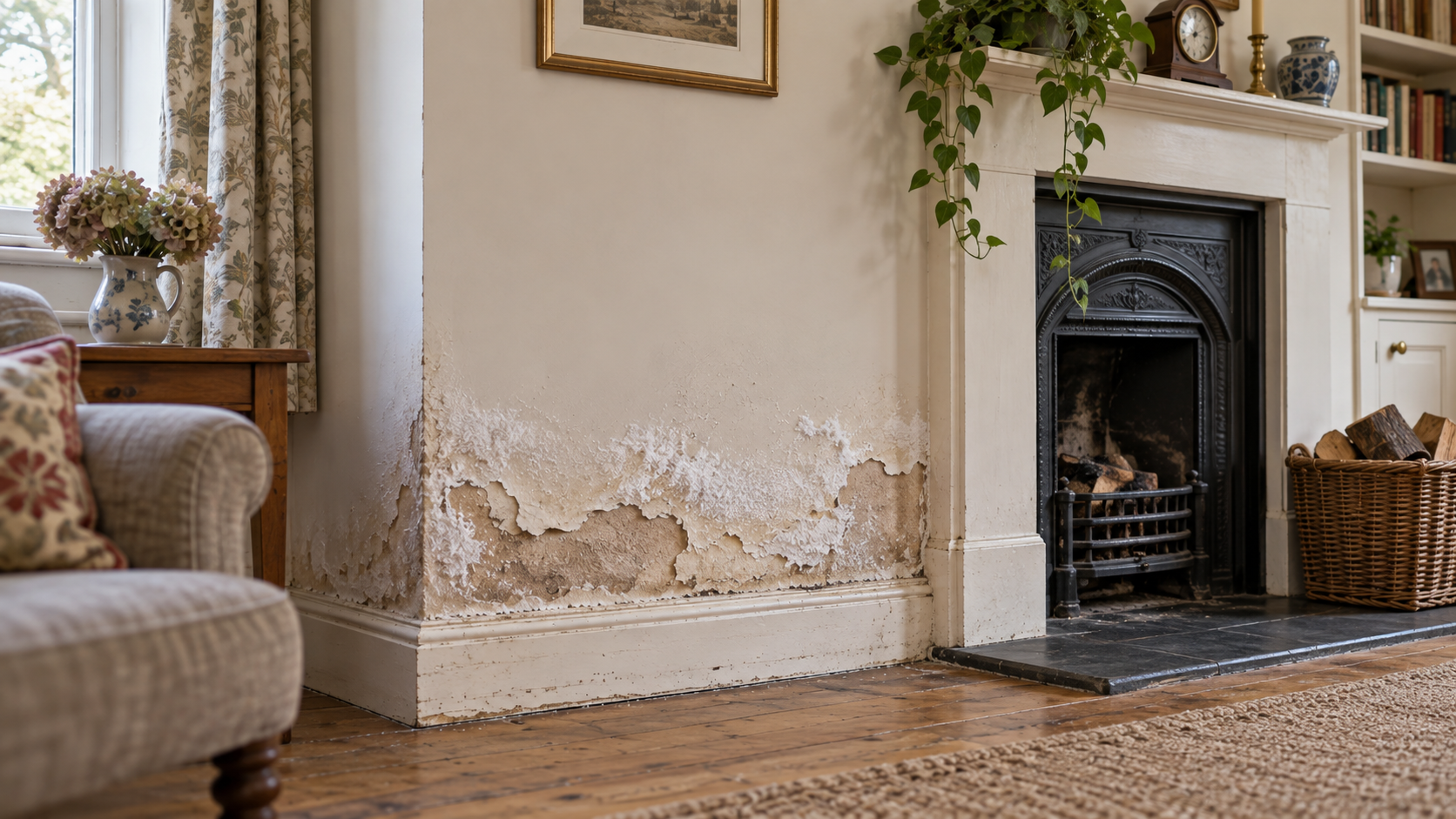
Old combustion salts matter
Years of burning fuel can leave salts in chimney masonry and plaster. Some of these attract moisture from the air and can produce recurring damp patches.
Check the chimney above
A chimney breast may be damp because water is entering at roof level and travelling down. The condition of flashings, pointing, pots and caps can therefore matter even when staining appears low down.
Unused flues can condense
Closing a fireplace changes airflow. A cold, poorly ventilated flue can collect condensation, particularly where outside masonry is exposed.
Do not diagnose from a meter alone
Salt-rich chimney plaster often gives high electrical readings. The history, moisture pattern and condition of the chimney all need considering.
Want somebody local to look at it?
If you would rather have the damp investigated in person, you can use our help page to describe the problem and decide what sort of specialist you need.