Rising damp guide
Concrete Floors and Damp at Wall Edges
Damp appearing after an old timber floor has been replaced with concrete deserves investigation of the new floor detail as well as the wall DPC.
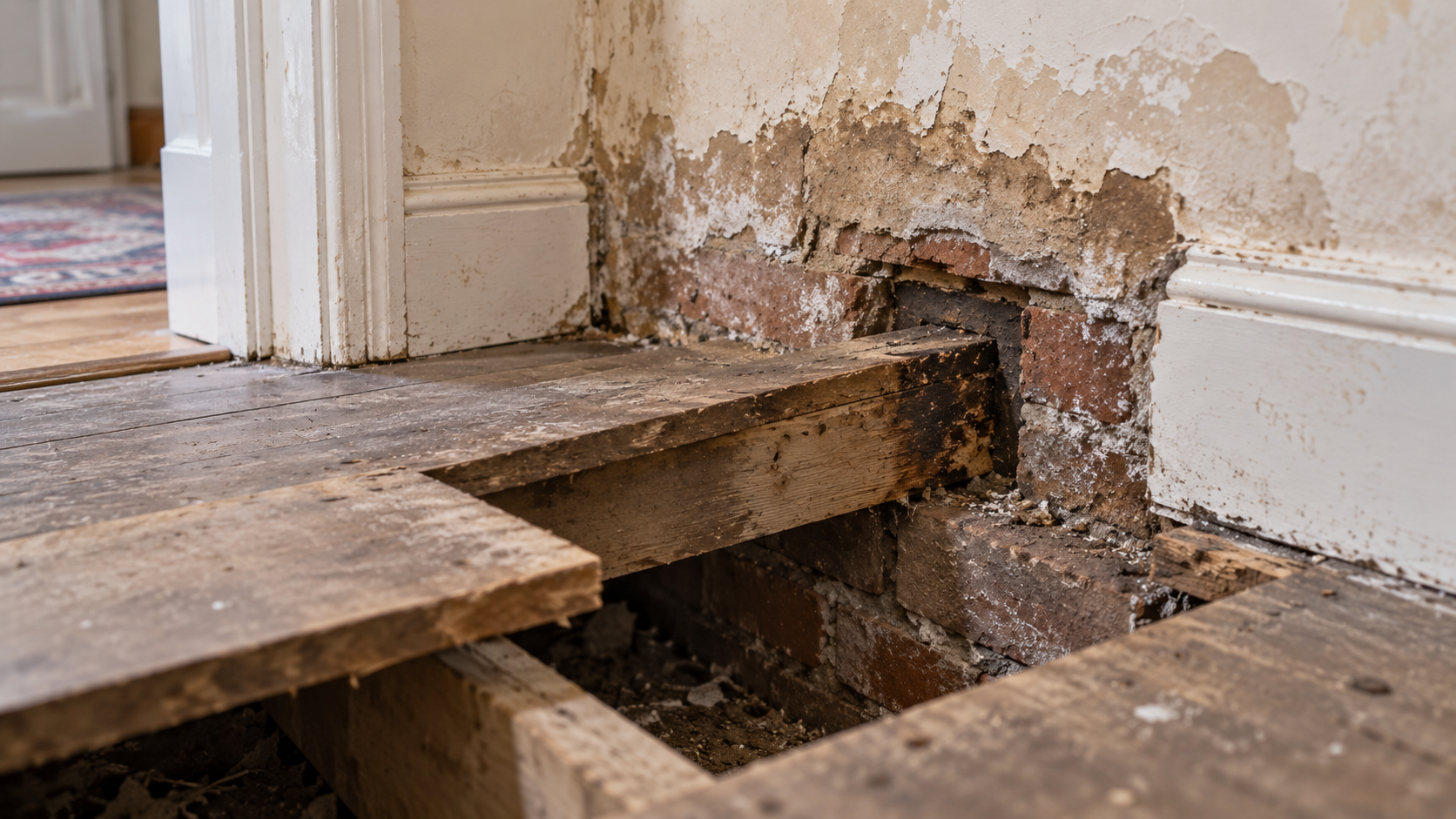
The membrane and DPC should work together
A modern solid floor normally uses a damp-proof membrane. Its junction with the wall DPC needs detailing so moisture cannot simply pass around the edge.
Older walls react to changes
Replacing a breathable suspended floor with an impermeable slab can alter evaporation patterns and concentrate moisture at adjoining masonry.
Look at the timing
If the wall was dry before floor replacement and damp appeared afterwards, that history is highly relevant to diagnosis.
Avoid treating the wall in isolation
Injecting the wall without understanding the floor edge may leave the actual moisture route untouched.
Want somebody local to look at it?
If you would rather have the damp investigated in person, you can use our help page to describe the problem and decide what sort of specialist you need.