Rising damp guide
Cavity Debris and Low-Level Damp
A cavity is supposed to separate the wet outer leaf from the inside of the house. Debris can defeat that separation.
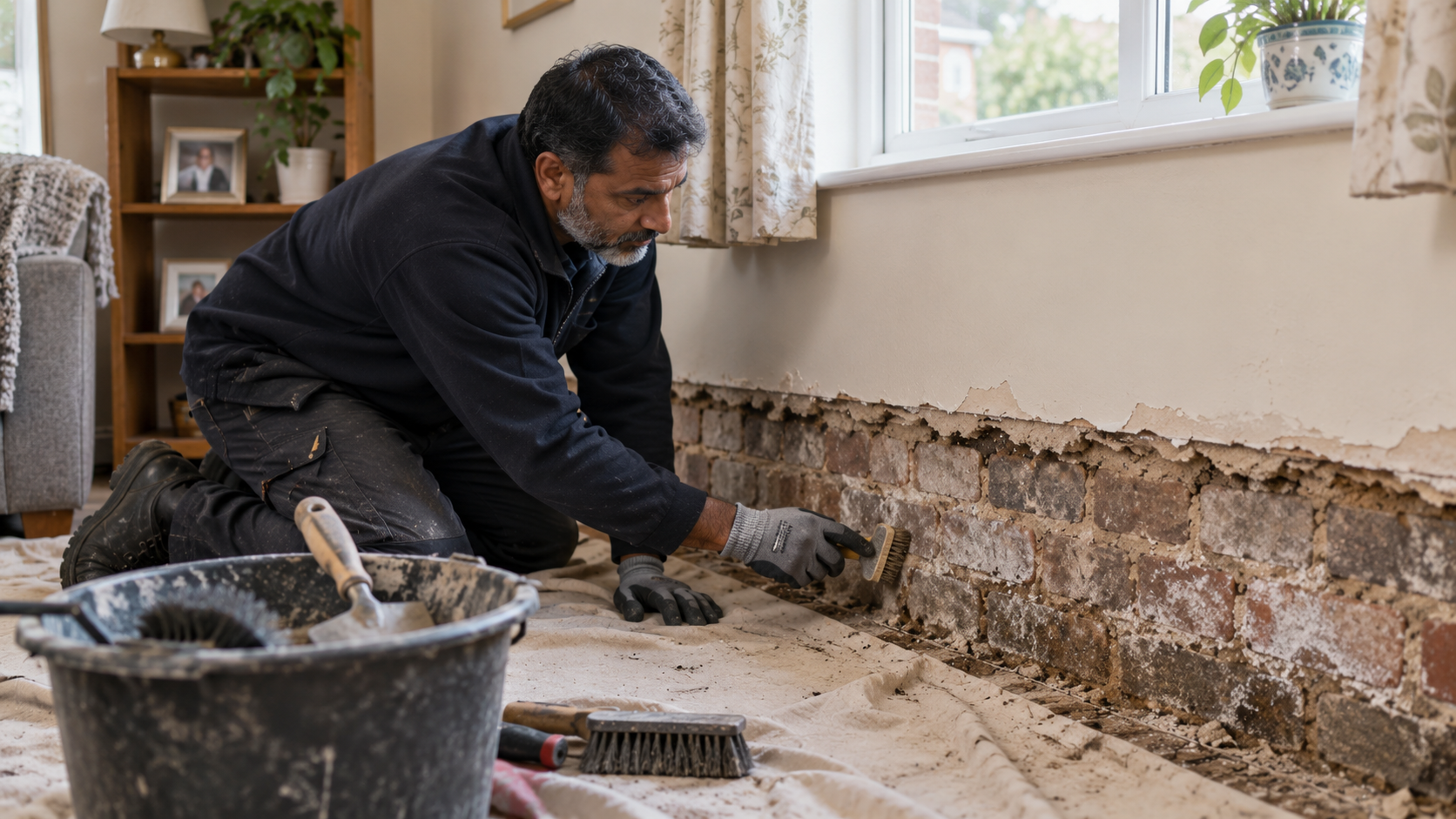
How debris gets there
Mortar can fall into a cavity during construction, while later alterations can introduce rubble or insulation fragments. If enough material accumulates at the base it may touch both leaves.
Why the internal pattern can look like rising damp
Moisture entering through the outer wall can cross the bridge and appear low down on the inner leaf. From inside, the result can resemble moisture rising from the ground.
Evidence before opening the wall
Construction type, borescope inspection and the relationship between damp areas and external exposure can help decide whether cavity investigation is justified.
Clearing must be targeted
There is little value in opening large areas of wall without evidence. The aim is to identify and remove a real bridge, not to excavate the cavity on speculation.
Want somebody local to look at it?
If you would rather have the damp investigated in person, you can use our help page to describe the problem and decide what sort of specialist you need.