Rising damp guide
Wall Still Damp After a New DPC?
A new damp-proof course does not make a wet masonry wall dry overnight. But persistent damp also deserves checking rather than being dismissed indefinitely as “drying out”.
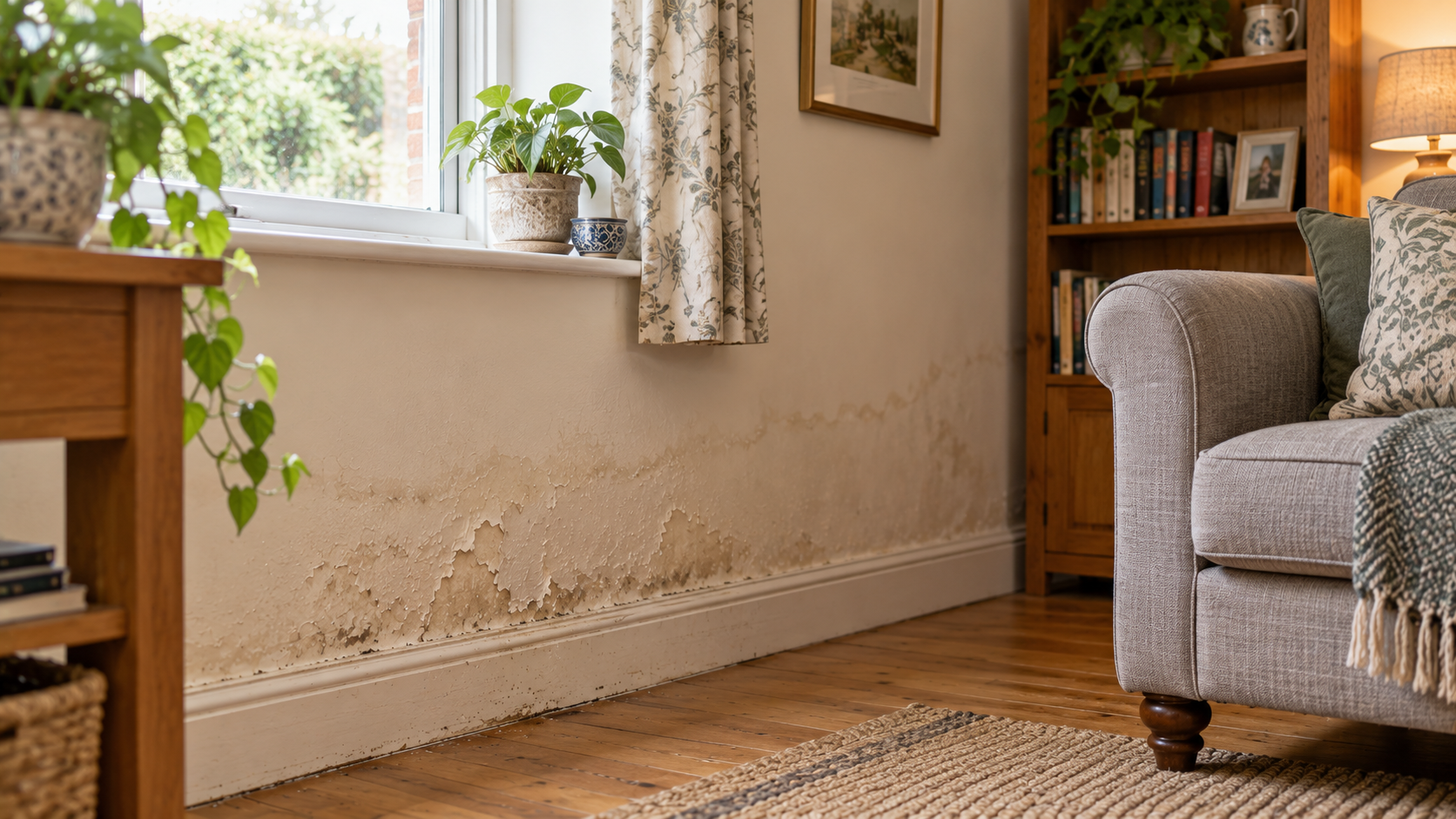
Thick walls take time to dry
Moisture already stored in masonry has to evaporate. Wall thickness, heating, ventilation and finishes all affect that process.
Old plaster can keep causing trouble
Salt contamination may attract atmospheric moisture and leave the surface looking damp even when upward moisture has been reduced.
Bridging may still be present
High ground, low render or cavity debris can continue to bypass the treatment if these details were not corrected.
Consider a different water source
If one section remains much wetter than the rest, look again for pipes, drains or rain penetration rather than assuming the whole treatment has failed.
Want somebody local to look at it?
If you would rather have the damp investigated in person, you can use our help page to describe the problem and decide what sort of specialist you need.